Epoxy flooring has accumulated a collection of myths — some based on genuinely bad products or installs, some on misunderstandings, and some on confusion between DIY kits and professional systems. Some version of most of these myths has been true for some installs. None of them are inevitable with a quality professional system. Here's the straight story.
Myth 1: Epoxy floors are slippery
The grain of truth: a smooth, high-gloss epoxy floor can be slippery when wet — comparable to a smooth tile floor.
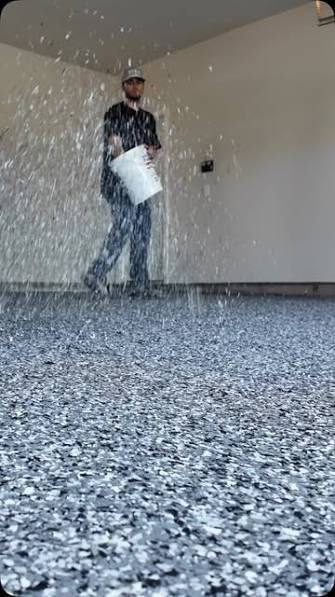
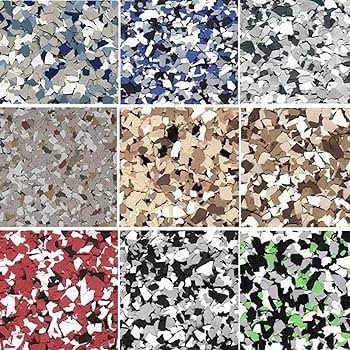
The reality: decorative flake systems — the most common residential garage finish — have natural texture from broadcast flake that provides meaningful slip resistance even when wet. For solid-color finishes, aluminum oxide or silica sand is routinely broadcast into the topcoat during application, adding texture without noticeably changing the appearance. Properly specified commercial and industrial floors require DCOF (Dynamic Coefficient of Friction) testing and minimum ratings. Slip resistance is a specification choice, not a fixed property of epoxy.
Verdict: partly true for smooth finishes without additives. Not true for flake systems or properly specified commercial floors.
Myth 2: Epoxy floors always yellow
The grain of truth: aromatic epoxy — the most common and least expensive formulation — does yellow in UV exposure. It's a real and common complaint from residential installs in sun-exposed garages.
The reality: UV yellowing is a property of aromatic chemistry specifically, not of epoxy generally. Aliphatic formulations — including polyaspartic, now the standard residential topcoat — are UV-stable and don't yellow. The industry moved to polyaspartic specifically because of this problem, and a quality residential install today uses a polyaspartic or aliphatic clear as the final coat. The yellowing problem has been solved by products that have been widely available for over a decade.
Verdict: true for aromatic epoxy clears, which are now rarely used in quality residential installs. Not true for polyaspartic and aliphatic systems.
Myth 3: Epoxy floors peel — it's just a matter of when
The grain of truth: many epoxy floors do peel, and enough people have experienced it that pessimism is understandable.
The reality: epoxy floors peel for specific, preventable reasons — primarily inadequate surface preparation and moisture. A properly prepared slab (diamond-ground, moisture-tested, contamination-free) with an appropriate primer and a quality topcoat produces a floor that doesn't peel. The bond between properly prepared concrete and a well-applied epoxy primer exceeds the tensile strength of the concrete itself. The problem is that many installs — both DIY and budget professional — skip the prep steps that prevent peeling. The floor peels, the owner concludes epoxy always peels, and the myth perpetuates.
Verdict: true for improperly installed systems. Not true for properly installed ones. The deciding factor is prep.
Myth 4: DIY kits are just as good as professional installs
The grain of truth: DIY kits are epoxy products and do bond to concrete, initially.
The reality: DIY kits are fundamentally different in three key ways: they're thinner (much lower solids content), they rely on acid etching rather than mechanical grinding, and they don't include UV-stable topcoats. The result is a floor that looks good for the first summer and begins showing problems within 1–3 years under normal use. A failed kit floor has to be professionally ground off before recoating — so you pay for the kit, the removal, and the correct install. The total spend almost always exceeds the cost of a professional install from the start.
Verdict: not true. The systems are not equivalent.
Myth 5: Epoxy is too slippery for industrial or commercial use
The grain of truth: an improperly specified high-gloss epoxy in a wet industrial environment would be a safety problem.
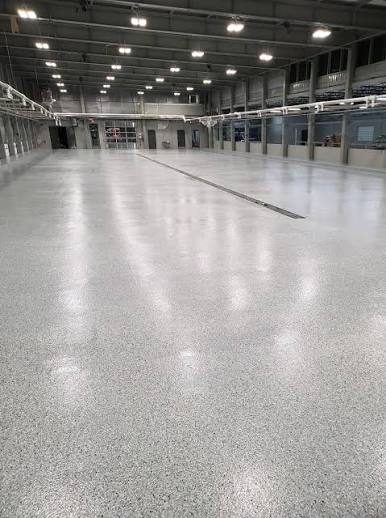
The reality: epoxy systems are among the most widely used industrial flooring systems in the world — installed in food processing facilities, pharmaceutical plants, warehouses, and government buildings. They're used because they can be designed to meet rigorous slip resistance requirements. Anti-slip aggregate, surface texture specification, and DCOF ratings are the tools for designing a system that meets OSHA and ANSI requirements. Properly specified epoxy systems meet those requirements routinely.
Verdict: not true for properly specified systems.
Myth 6: Epoxy requires a lot of maintenance
The grain of truth: some products sold as "epoxy floor coating" — particularly thin, wax-containing products — do require regular maintenance.
The reality: a quality resinous epoxy floor system is one of the lowest-maintenance floors available. The sealed, non-porous surface means nothing soaks in. Cleaning requires only sweeping and damp mopping with a pH-neutral cleaner. No waxing, no sealing, no stripping cycles. This is one of the primary reasons people choose epoxy — it's dramatically easier to maintain than bare concrete, tile, or carpeting.
Verdict: not true for professional resinous systems. Low maintenance is a selling point, not a liability.
Myth 7: You can't install epoxy in cold weather
The grain of truth: standard epoxy has a minimum application temperature of around 50°F, and below that, cure is incomplete.
The reality: polyaspartic products with temperature ranges down to near freezing are available and widely used. Supplemental heating allows installation in unheated spaces in cold weather when necessary. Fall and spring installation in the Mountain West — common scenarios — is entirely feasible with appropriate product selection and temperature monitoring. True mid-winter installation in an unheated garage requires planning and the right products, but it's not impossible.
Verdict: partly true for standard products without mitigation. Not true with appropriate product selection and heating.
Myth 8: Polished concrete is maintenance-free
The grain of truth: polished concrete requires no recoating, no waxing, and no stripping — much less than many floor types.
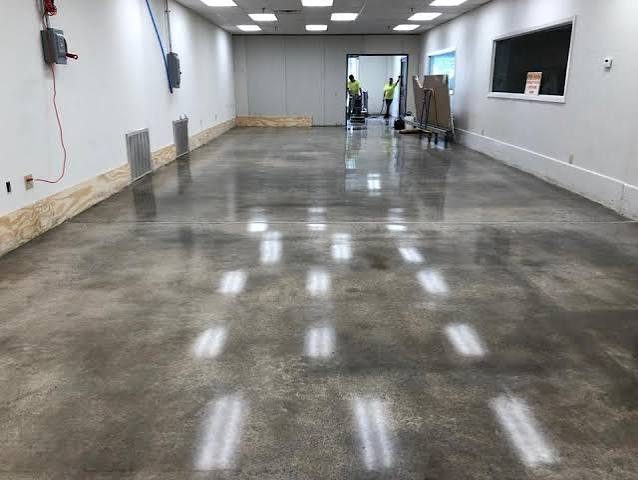
The reality: polished concrete is low maintenance, not no maintenance. Regular dust mopping is essential — fine grit is the primary degradation mechanism. pH-neutral cleaners are required (acidic cleaners etch and dull the polish). Periodic re-burnishing restores gloss in high-traffic areas. Guard reapplication extends stain resistance. None of these are onerous, but "zero maintenance" sets unrealistic expectations that lead to disappointment.
Verdict: low maintenance, definitely. Zero maintenance, no.
The common thread
Most epoxy myths share the same root: they're true for some products or some installs, but they're not inevitable properties of the material class. Cheap products produce cheap results. Skipped prep produces failures. Inappropriate products for the application produce disappointment. The solution is specification and installation quality — which is entirely controllable. An epoxy floor built right doesn't peel, doesn't yellow, isn't slippery, and doesn't require constant attention.